

2026-11-05 16:20:50
|
 35
 0
Physical gold is widely recognised in the market, but this does not necessarily mean investors can buy and sell it as easily as stocks or gold ETFs through a trading account. Compared with financial assets such as stocks and gold ETFs, physical gold generally has lower liquidity. This is mainly due to differences in trading channels, inspection and verification requirements, bid-ask spreads, and settlement procedures. Understanding these differences can help investors choose a gold investment option that better suits their needs.
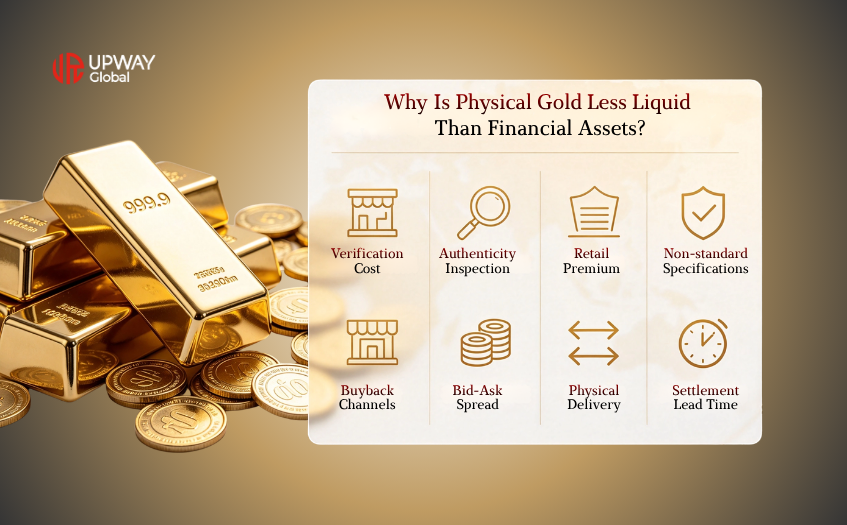
Why Is Physical Gold More Difficult to Sell?
1. Fewer Available Trading Channels
Financial assets such as stocks and gold ETFs can generally be traded online through investment accounts, with buy and sell orders matched electronically through trading systems. Physical gold, on the other hand, must usually be sold through channels such as banks, jewellery retailers, or gold-buyback dealers.
Different channels may have different buyback policies, quoted prices, and transaction requirements. Investors therefore need to understand the relevant buyback terms in advance and identify a suitable outlet before selling their gold.
2. Physical Gold Requires Inspection and Verification
When purchasing physical gold, buyers generally need to verify its weight, purity, and authenticity. In China, investment-grade gold bars commonly meet the Au9999 standard, which requires a gold purity of 99.99%. LBMA Good Delivery gold bars, by comparison, follow a separate set of delivery standards. They must meet a minimum gold purity of 99.5%, along with specific requirements for weight, refiner markings, and serial numbers.
Because these bars follow recognised specifications and quality standards, they are widely accepted in professional gold markets. Ordinary gold jewellery and gold products in non-standard formats, however, may need to undergo additional testing to establish their actual purity and weight before a buyback can be completed.
Therefore, the ease of selling physical gold depends not only on its purity but also on its specifications, degree of standardisation, and market acceptance.
3. Buy-Sell Price Differences Affect the Amount Recovered
The purchase price of physical gold does not always match the underlying market price of gold. It may also include making charges, brand premiums, and retail costs. When gold is sold, buyback dealers typically determine their offers based on the prevailing gold price, the gold's purity, their buyback policies, and any applicable fees.
The difference between the original purchase price and the buyback price directly affects how much money investors can recover.
For example, suppose an investor purchases a 10-gram piece of 999 fine gold jewellery when the prevailing market gold price is RMB 880 per gram. After adding making charges, brand premiums, and other costs, the actual purchase price comes to RMB 1,060 per gram.
When the investor later decides to sell, assume the market gold price remains unchanged at RMB 880 per gram, but the buyback dealer offers RMB 860 per gram.
The calculation would be as follows:
In other words, even if the market gold price has not fallen, the investor may still face a RMB 2,000 difference due to the initial purchase premium and the gap between the purchase and buyback prices.
This illustrates why the quoted market gold price is not necessarily the actual price investors pay when buying or receive when selling physical gold. The potential resale costs should also be taken into account when making a purchase.

4. Transaction Procedures and Settlement Take Time
Selling physical gold generally involves several steps, including confirming the transaction, inspecting the gold, verifying its weight, and arranging payment. If transportation or inspection at a different location is required, the entire process may take even longer.
By contrast, stocks and gold ETFs can be traded electronically through exchanges or trading platforms. They do not require physical transportation or on-site inspection. Once a trade is executed, clearing and settlement are carried out electronically in accordance with the applicable market rules.
Is Physical Gold Always Less Liquid Than Financial Assets?
Not necessarily. The liquidity of physical gold is not determined solely by its physical form. Product specifications, the trading market, and available buyback channels also play important roles.
Under normal circumstances, physical gold is relatively less convenient to sell. However, standardised products such as LBMA Good Delivery gold bars and SGE standard 1 kg gold bars that meet the relevant delivery requirements are widely recognised in professional markets. Their market acceptance and tradability may therefore be higher than those of ordinary gold jewellery or non-standard gold products, potentially making them easier to sell.
Overall, physical gold places greater emphasis on direct ownership and physical delivery, while financial products such as gold ETFs generally offer more convenient electronic trading channels.
When choosing a gold investment product, investors should consider not only potential price movements but also their holding objectives, liquidity needs, transaction costs, and available resale channels.
Upway Global Risk Disclaimer: This article is for educational purposes only and does not constitute investment advice. Liquidity and resale costs vary considerably across different types of gold products. Investors should familiarise themselves with the applicable trading and buyback rules before making any decisions and should allocate their assets prudently.





 简体中文

 繁體中文
 English

 TradingView
 MT5 Web
 Spot Gold/Spot Silver
 Accounts
 Wallet
 Promotions
 Trading Tools
 News Updates
 Economic Calendar
 Investment Academy
 Beginner’s Guide
 Anti-Fraud Guide
 FAQs
 Upway APP
 Upway Desktop
 CTOTrader
 Upway HD
 About Upway
 Company News
 Affiliate Program
 Contact Us

